
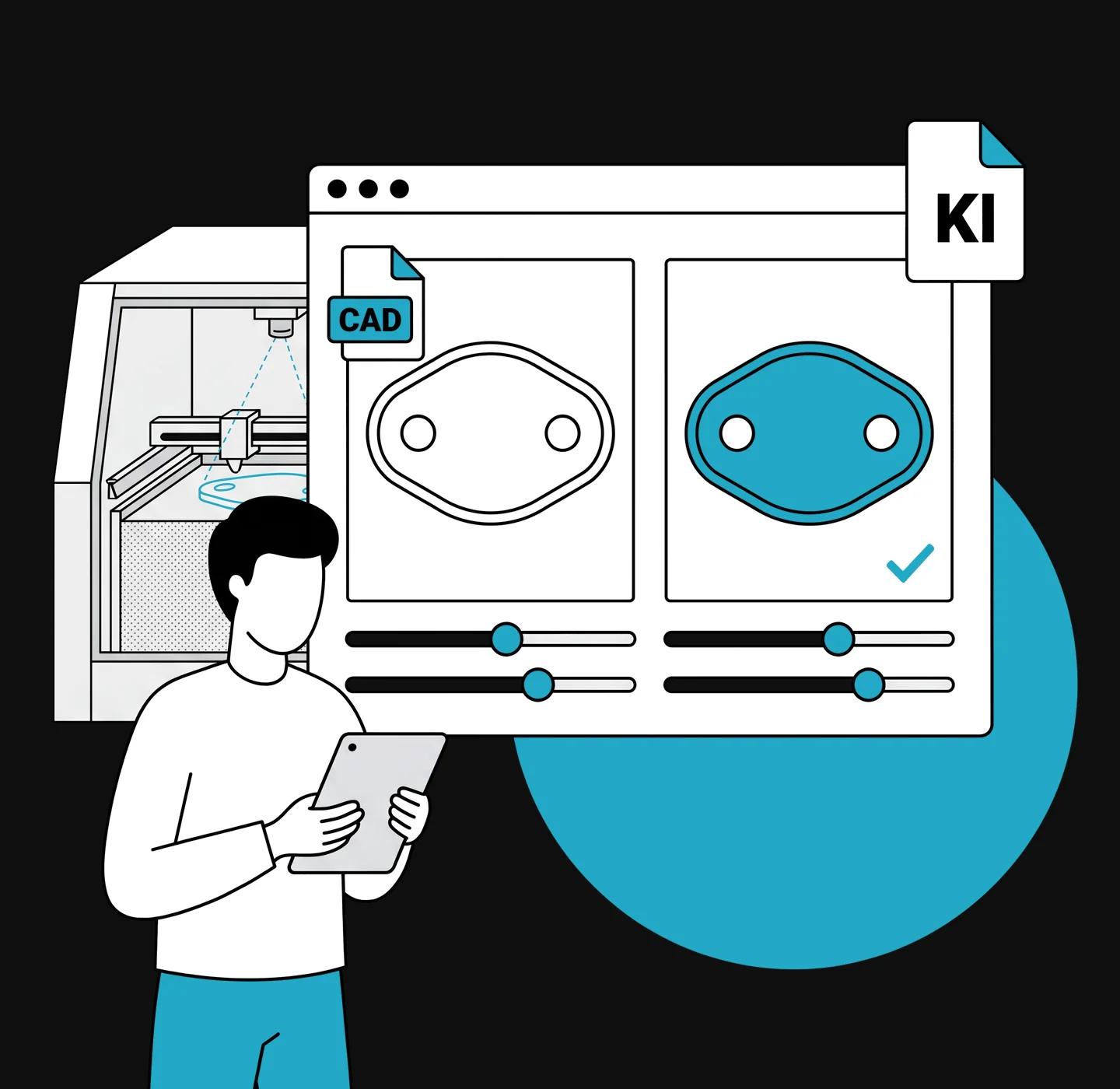

How ExOne detects layer defects in 3D printing before the next layer
ExOne builds binder jetting systems for industrial 3D printing. A camera compares every printed layer with the CAD model, and an RL agent adjusts binder flow and recoater speed in real time.
- Customer
- ExOne GmbH
- Industry
- Industrial 3D printing (binder jetting)
- Services
- IoT Business Model Builder, app development, AI Operator
- Technology
- Computer vision, reinforcement learning, MindSphere
Starting point
ExOne builds binder jetting systems for industrial 3D printing with sand and metal. The machines run worldwide, for example in foundries.
The S-Max Pro series already had everything needed to make machine data usable in the cloud. But the data was not yet being used. ExOne wanted to turn automation, software and AI into business models that deliver measurable value to customers and users.
Then there is the process itself: the part is built layer by layer. A defect in one layer carries over into all the following ones.
Implementation
It started with our IoT Business Model Builder. ExOne’s executive management, sales and development teams evaluated use cases and business models together with customers. The result was a basis for a management decision.
This led to ExOne Scout, the app for the machine, based on Siemens MindSphere. It shows process data in real time, also remotely, and reports the print status via notifications. Scout runs on the web, iOS and Android and is in use at customers in six languages.
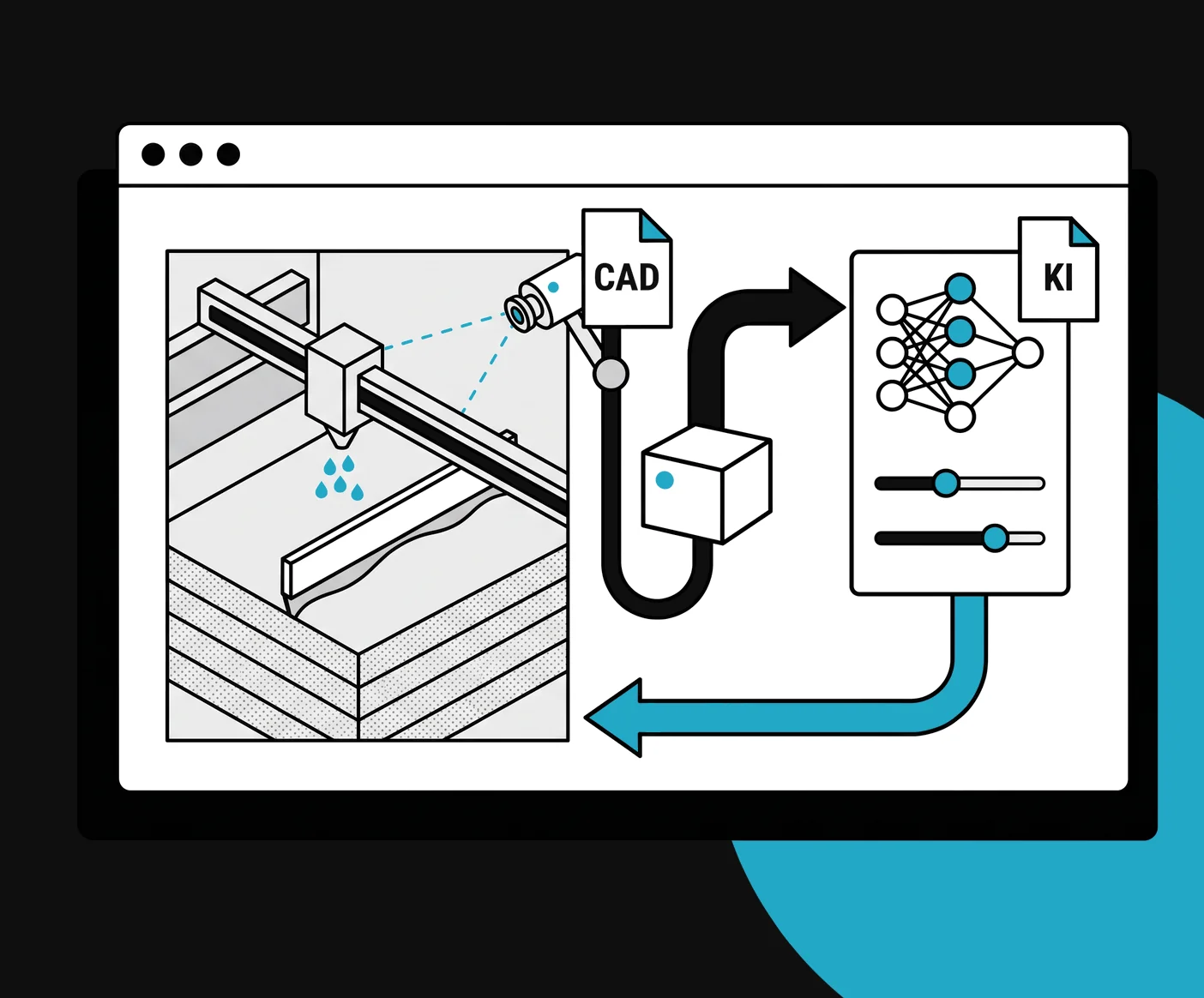
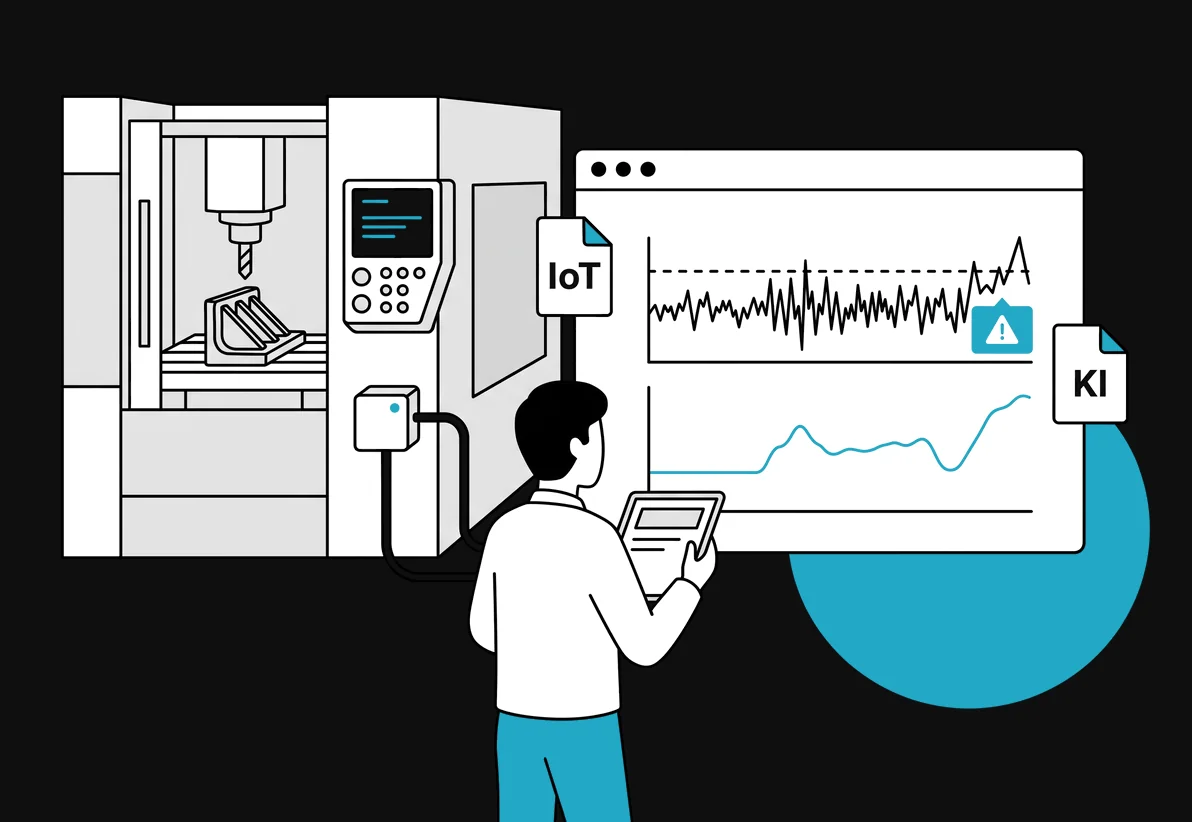
With the AI Operator, ExOne is taking the next step. A camera captures every printed layer and compares it with the CAD model in the build space. An RL agent detects layer defects before the next layer and adjusts binder flow and recoater speed in real time.
- Target/actual comparison of CAD and build space in every layer
- Reinforcement learning for binder flow and recoater speed
- Edge agent directly at the machine

Result
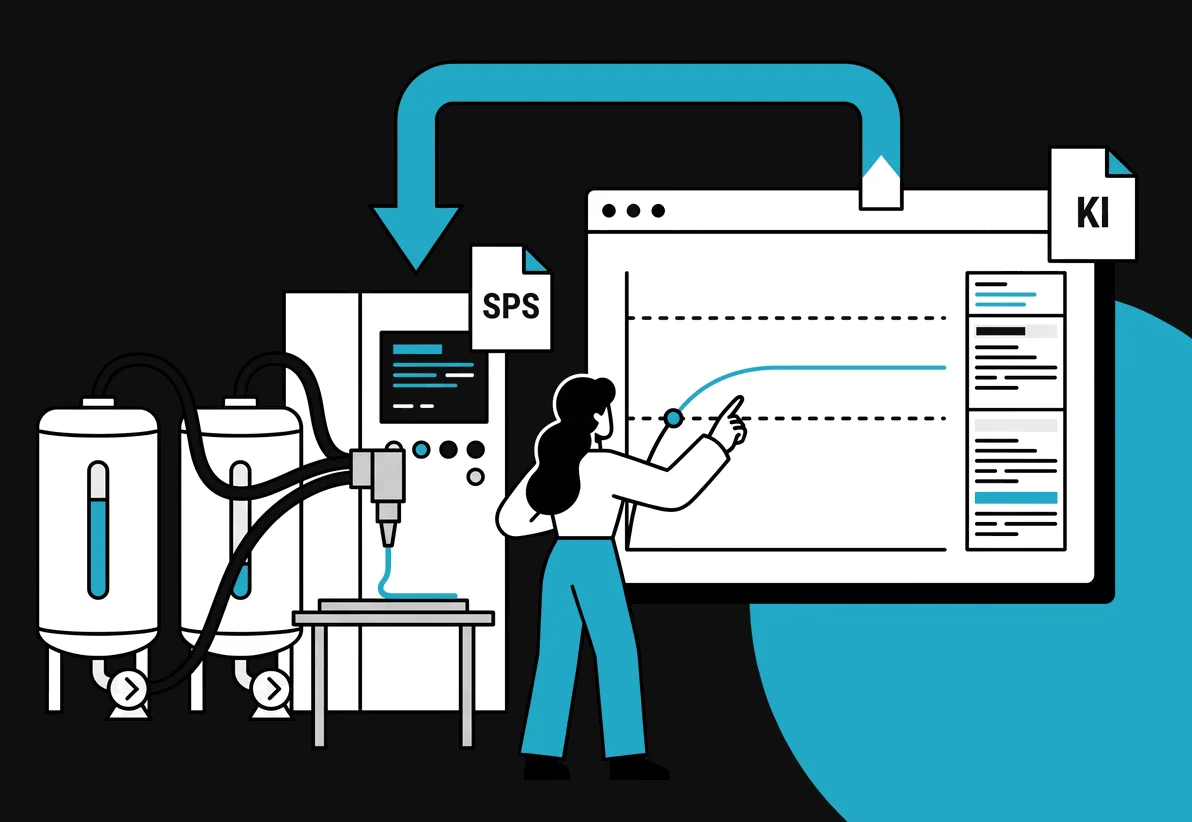
Layer defects are detected in the layer in which they occur. The print is corrected during the process or stopped in time, before scrap is produced.
Completed print jobs can be analyzed and compared, which results in recommendations for action. Because it is known at all times whether an S-Max Pro is printing, manufacturing networks share their capacity better.
- Print aborts
- −60 %
- First-pass yield
- +18 %
- New business models from the IoT Business Model Workshop
- 2
- Months of development to the first Scout app
- 3
- Languages in which ExOne Scout was rolled out
- 6
Testimonials


“The IoT Business Model Workshop brought brilliant ideas to light that are significantly advancing our Industry 4.0 strategy.”
Head of Development
“Scout is a key element in ExOne’s strategy.”
Global Marketing Director
More references
All references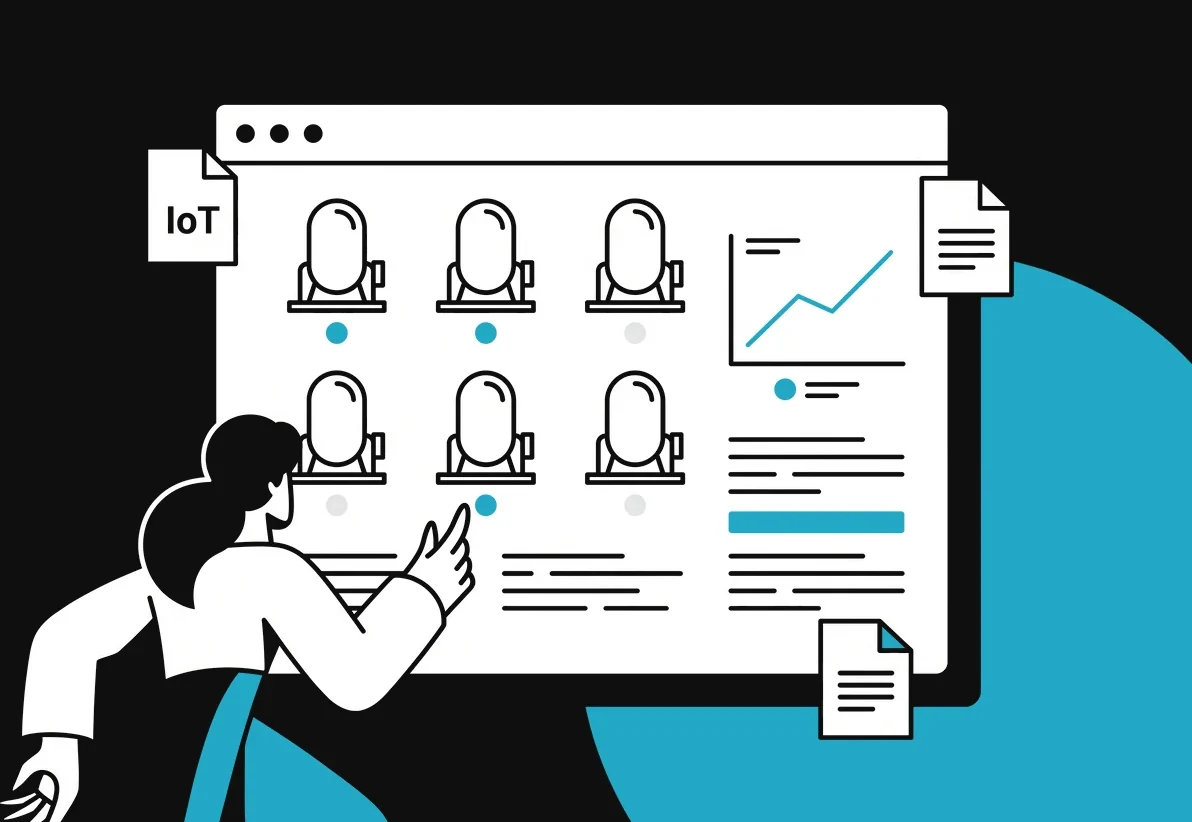
Let’s talk about your project.
Tell us which machine, which line or which platform you want to make better use of. In a first call you get an honest assessment.